Best Food Halls in Raleigh: A Local's Guide
Raleigh's food halls work because they solve a real problem: where do you take six people with six different appetites.
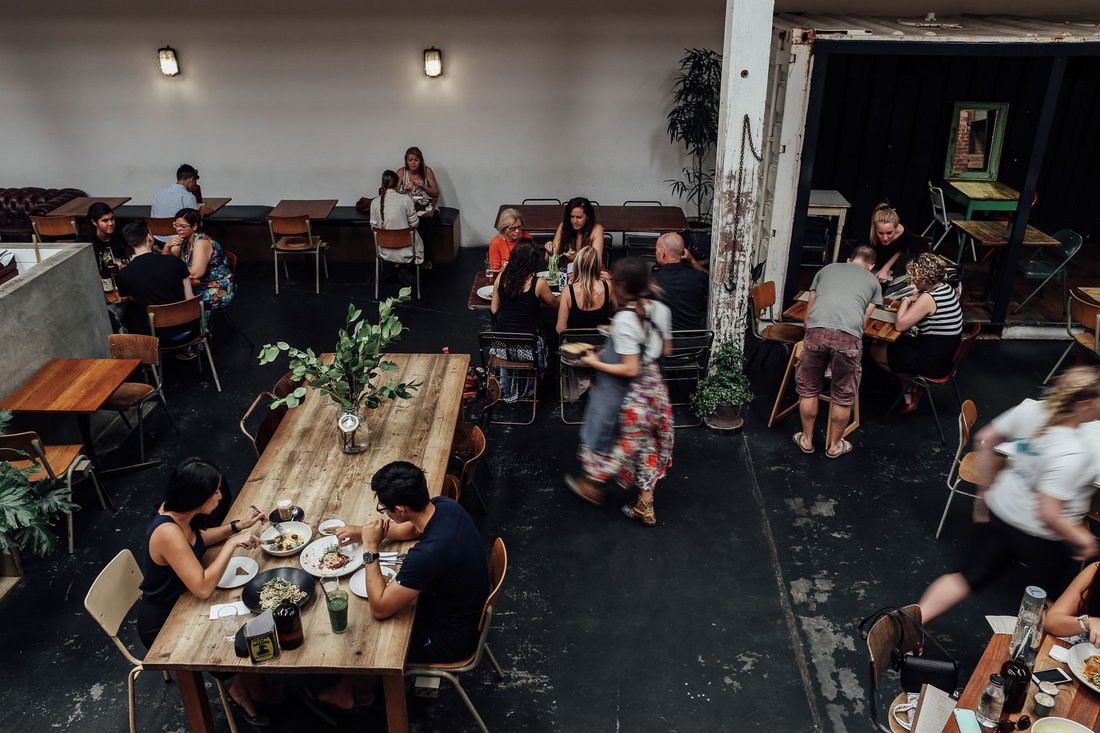
Saturday, half past noon, and every long table is claimed. A state employee still in her lanyard shares a bench with a family of five who parked two blocks over for the farmers market run. A toddler naps in a stroller wedged against the wall. Nobody asks if the seat next to them is taken; you just sit, because that's the deal a food hall makes with you. Ask around town for the best food halls in Raleigh and you'll get two answers fast, usually with strong opinions attached about which one you should hit first.
That's not an accident of geography. Both of Raleigh's major halls sit in and around downtown, in old industrial buildings that were something else first, part of the same wave that turned warehouses near the Warehouse District into breweries and galleries over the last decade. The brick and steel bones of those buildings do a lot of the work. High ceilings, tall windows, concrete floors that have seen heavy equipment, it reads as unfussy in a way a purpose-built food court never quite manages.
Why the best food halls in Raleigh function differently than a mall food court
The comparison to a mall food court comes up constantly, and it's worth taking seriously for a second because the differences explain why these places work. A mall food court is built around volume and turnover; a good food hall is built around lingering. The seating is communal by design, not by accident of overflow. You're meant to end up next to strangers, and the vendors inside tend to be independent operators or small local groups rather than the same six national chains repeated in every city. That's the pitch, anyway, and on a good weekend afternoon it holds up. The energy comes from the mix, someone grabbing lunch on a fifteen-minute break, a first date that picked neutral ground on purpose, grandparents letting kids pick their own plates.
Transfer Co. Food Hall on the east side of downtown
Transfer Co. sits inside a converted industrial building on the east side of downtown, and it wears that history plainly. The building itself is the draw as much as anything inside it. Exposed trusses, oversized garage doors that roll up when the weather cooperates, a layout that feels more like a public square with a roof than a restaurant. It's become one of the connective spots for the neighborhood around it, the kind of place where people show up without a specific vendor in mind and figure it out once they're inside, based on whatever line is shortest or whatever smell hits them first walking through the door.
What sticks with you after a visit isn't a single dish. It's the pattern of the place: people crossing the room to compare notes with their table, kids running the length of the floor while adults keep half an eye on them, the low roar of a room that was never designed to be quiet. It's a spot that rewards showing up hungry and undecided.
Morgan Street Food Hall downtown
Morgan Street sits near the western edge of downtown, a walkable distance from Moore Square, which makes it a natural landing spot for the lunch crowd during the week and a different animal entirely on weekends. On weekday afternoons it fills with people who work nearby and have thirty or forty minutes to spend. On Saturday it slows down and stretches out, drawing families and visitors who treat it more like a destination than a quick stop between meetings.
The building leans a little more polished than Transfer Co., with a layout that funnels foot traffic past a rotating set of stalls before opening into shared seating. That rotation is part of the appeal and part of the risk of writing about any food hall in specific terms: what's operating inside changes over time, sometimes within a single season, so the honest advice is to go see what's currently there rather than chase a stall that may not exist by the time you arrive.
How to actually work a food hall
A few habits make the difference between a good visit and a frustrating one, especially with a group:
- Do a lap before you order anything. Every stall in the building is visible from the shared seating, so there's no cost to scouting the whole room first.
- Split up and regroup. Everyone in your party can order from a different stall and meet at the same table, which is the entire point of the format.
- Go on a weekday if you want quiet, or lean into the weekend crowd if you want the full effect of the room.
- Check hours before you go. Individual vendors inside a hall don't always keep the same schedule as the building itself.
Raleigh's food halls also make a decent argument for pairing a visit with the rest of the neighborhood. Both sit within an easy walk of Raleigh's brewery scene, and neither building demands a reservation or a plan, which matters if you're building a day around a weekend downtown and don't want every stop locked in advance.
None of this makes Raleigh unique, and nobody here is claiming it invented the format. What the city has done is put two solid, differently flavored versions of the idea within walking distance of each other, both anchored in buildings that were something else first. The takeaway is simple: pick whichever one is closer to what else you're doing that day, show up with an appetite and no fixed plan, and let the room do what it's built to do.